Music Catalogue Investment: What Most Investors Are Still Getting Wrong
Milan Ehrhardt writes about how the actual opportunity in music catalogue investment in 2026 is not with the blockbuster catalogues that every fund on earth is bidding on. The opportunity is in the layer that billion dollar funds structurally cannot reach.

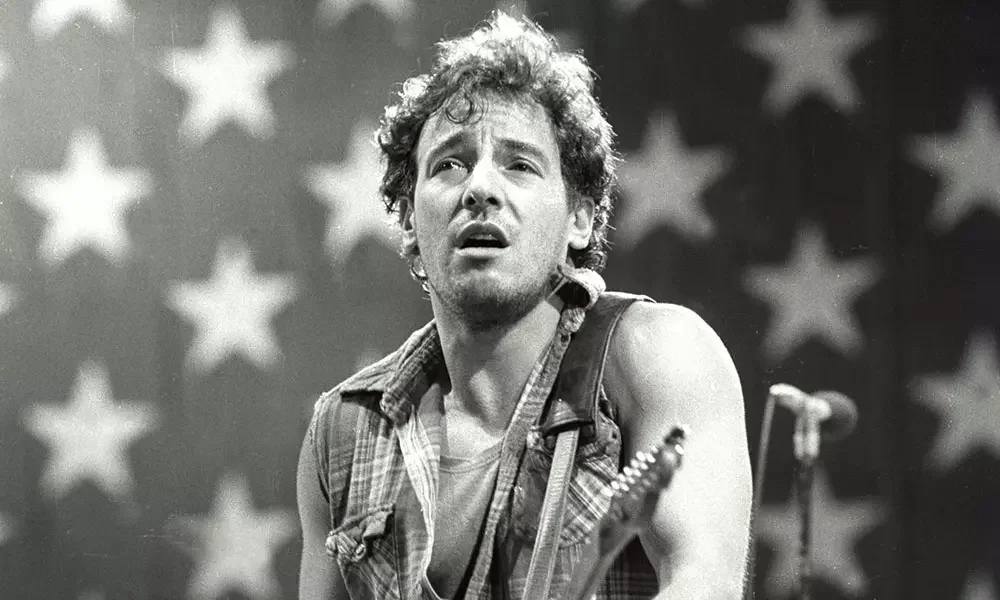
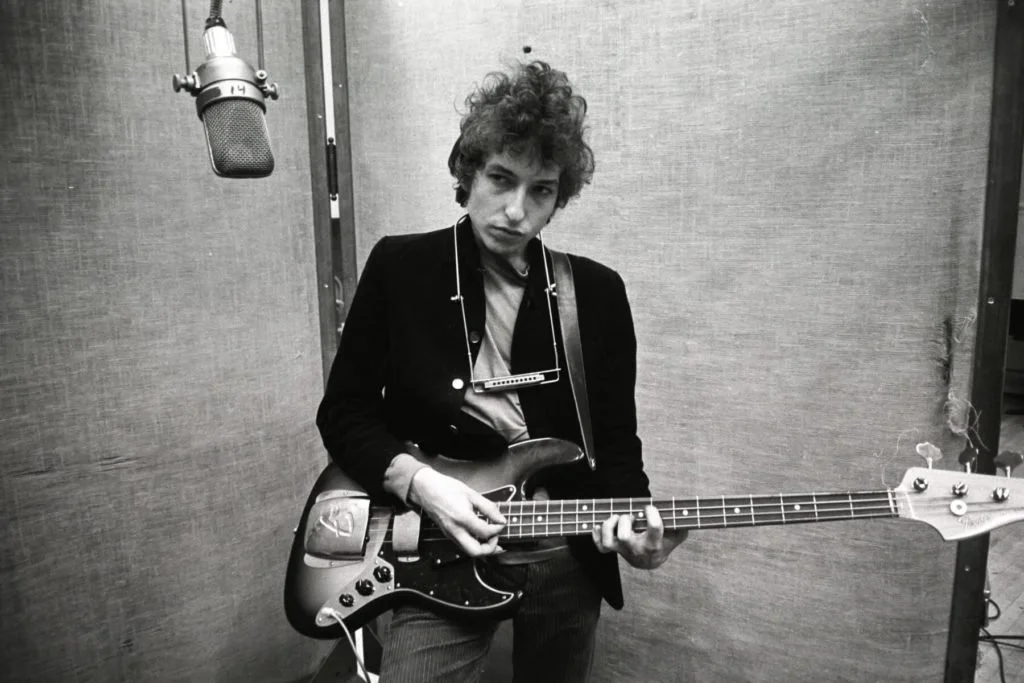
Music catalogue investment has gone mainstream. BlackRock, Blackstone, KKR and Apollo have poured over $20 billion into music rights since 2019. Hipgnosis turned a music royalty fund into a London Stock Exchange listing, which eventually imploded. The financial press has written thousands of words about Bob Dylan selling his catalogue for $300 million and Sony paying $1.27 billion for Queen.
Bob Dylan took $300 million from Universal and everyone called it genius. Genius for who? Dylan walked away from perpetual rights to his life's work, the royalty engine that compounds forever, in exchange for a one time payout his grandchildren can't touch. The buyers got a century of income. The artist got a wire transfer. And somehow the financial press reported this as a triumph for the artist.
But the actual opportunity in music catalogue investment in 2026 is not with the blockbuster catalogues that every fund on earth is bidding on. The opportunity is in the layer that billion dollar funds structurally cannot reach because it's too small, too niche, too complex, or too unfamiliar to people whose entire frame of reference is the S&P 500. Independent labels. World music archives. Genre specialist catalogues with 30 years of sync history and zero institutional interest. Assets generating real, compounding, recession proof income at multiples that actually make sense.
That's what this piece is about. How music catalogue investment actually works, where the real returns are, and why the biggest players in the game are probably the worst people to learn from.
Music Catalogue Investment 101: What You're Actually Buying
The first thing to understand about music catalogue investment is that you're not buying recordings. You're buying rights. And those rights generate income in multiple distinct ways that most people, even those with serious investment experience, don't fully understand.
There are two categories of music rights that form the foundation of any catalogue investment: publishing rights and master rights.
Publishing rights belong to whoever owns the underlying composition, the melody and the lyrics of a song. In the context of music catalogue investment, publishing rights are often considered the more stable and valuable of the two right types, because they exist independently of any single recording and generate income across every cover version, every sample, every performance. These rights exist independently of any particular recording. If someone covers the song, streams it, or licenses it for a film, the publishing rights generate income. Master rights belong to whoever owns the specific recorded performance. When a song streams on Spotify, both the publishing rights and the master rights generate royalties, flowing to different parties through different collection mechanisms.
When you invest in a music catalogue, understanding which rights you're acquiring, and in what combination, is foundational to any valuation.
The four royalty streams in music catalogue investment
Within those two categories, there are four types of royalty income that a catalogue owner receives.
Performance royalties are generated every time a composition is played publicly. On radio, in a venue, on a streaming platform, at a concert. In the UK, PRS for Music collects these. In the US it's ASCAP, BMI and SESAC. Every play, globally, generates a tiny royalty. Across thousands of tracks over decades, it compounds into serious money.
Mechanical royalties are generated whenever a song is reproduced. Pressed onto vinyl, sold as a download, or streamed interactively on Spotify or Apple Music. Streaming platforms have historically underpaid mechanical royalties, and rights holders have been fighting for rate increases for years. Recent decisions by the Mechanical Licensing Collective in the US have moved rates upward.
Sync royalties are generated when music is licensed for use alongside video content. Films, TV shows, adverts, documentaries, video games, social media content. Every placement is individually negotiated and fees range from a few hundred pounds to hundreds of thousands depending on the context. For certain types of catalogues, sync is the most important and highest margin revenue stream in the entire music catalogue investment income profile.
Neighbouring rights are the most overlooked income stream in music catalogue investment. These are performance royalties from the broadcast and public performance of a master recording, separate from the publishing royalties. Collected by PPL in the UK. For a catalogue with decades of radio broadcast history, particularly across Europe where neighbouring rights income is well established, this can be substantial and extremely consistent.
These four income streams layer on top of each other. A single well placed track can simultaneously earn streaming royalties, neighbouring rights income from a broadcast, a sync fee from a documentary placement, and mechanical royalties from a new physical pressing. Four separate income flows from one piece of music. Multiply that across a catalogue of hundreds or thousands of tracks and the income profile becomes very compelling very quickly.


How the Music Catalogue Investment Market Got Here
To understand where the opportunity in music catalogue investment is today, it helps to understand how this market developed.
For most of the 20th century, music rights were something artists, managers and labels thought about. The financial world largely ignored them. The income was real but hard to track, fragmented across dozens of collection societies in different countries, and frankly not interesting enough at the scale institutional money operates at.
What changed everything was streaming. When Spotify launched in 2008 and the industry shifted from selling records to selling access, several things happened simultaneously. The data got dramatically better: for the first time you could see in near real time exactly how many times a track was being played, in which country, on which platform, by which demographic. That transparency is what financial investors need to build models. The income became more predictable. And the discovery problem disappeared. Getting old music in front of new listeners used to require radio promotion and physical retail. Streaming algorithms do it automatically.
By the mid 2010s a handful of people connected the dots. Music catalogues were perpetual income streams, backed by legal protections lasting decades, generating returns uncorrelated with stocks or bonds, in a world desperate for anything that fit that description.
David Bowie securitised music rights as early as 1997. The Bowie Bonds raised $55 million by packaging future royalty income into a bond instrument. It was decades ahead of its time. By 2020 the same idea came back at institutional scale, and the market for music catalogue investment transformed from a niche curiosity into a mainstream alternative asset class.
Why Music Catalogue Investment Works: The Core Thesis
The fundamental case for investing in music catalogues rests on one insight that holds up under serious scrutiny: the income doesn't care what the economy is doing.
People don't cancel Spotify when markets fall. Netflix keeps commissioning documentaries. Radio keeps broadcasting. The consumption of music is remarkably stable regardless of broader economic conditions. WIPO confirmed that music royalty income shows very low correlation with economic cycles. In plain English: royalties keep paying out when other investments are getting hammered.
The numbers support this. The global music market hit $105 billion in 2024 and is projected to reach $200 billion by 2035. Global on demand audio streams grew 14% in 2024 alone to reach 4.8 trillion plays. And crucially, that growth is not slowing down. It's being driven by streaming expanding into markets that barely existed five years ago: Sub Saharan Africa, Southeast Asia, South Asia, Latin America. Millions of new listeners coming online every month, every one of them generating royalties every time they press play.
The catalogue dominance data is the most important number in music royalty investment right now. According to Luminate's 2024 report, catalogue music, defined as recordings older than 18 months, accounted for 73.3% of total album consumption in the US. The market for old recordings is not shrinking as new music is released. It is growing. The streaming algorithm doesn't care when a track was made. A recording from 1988 competes on the same platform with the same discovery infrastructure as something released last Tuesday.
That's a structural shift that changes the economics of owning music rights permanently.
This is why the total addressable market for music royalty investment keeps expanding even as more capital enters the space. Every new subscriber in Lagos or Jakarta or Mexico City is a new royalty source for every rights holder whose music they stream. The income from a catalogue acquired today will be earned by a larger global audience five years from now than the one listening today. That compounding dynamic is one of the most underappreciated aspects of music catalogue investment, and it's one that investors coming from traditional asset classes often completely miss.
Thinking about selling your catalogue?
The Hipgnosis Story: What It Tells You About Music Catalogue Investment
No discussion of music catalogue investment in 2025 is complete without understanding what happened with Hipgnosis Songs Fund, because it contains both the strongest validation and the clearest warning this market has produced.
Merck Mercuriadis, a former music manager who had worked with Elton John, Iron Maiden and Beyoncé, created Hipgnosis Songs Fund in 2018 as a publicly listed vehicle on the London Stock Exchange. The thesis was simple: music royalties are a superior asset class, uncorrelated with economic cycles, with durable income and strong growth potential. He was right about the thesis.
What went wrong was the execution. Merck acquired aggressively, paying record multiples for some of the most famous catalogues in the world. At the peak, Hipgnosis owned rights to over 65,000 songs and had spent $2.2 billion acquiring them. The fund was structured in a way that created management fees as a percentage of assets, incentivising rapid growth over disciplined acquisition. Catalogues were marked up in value immediately after purchase, inflating the reported asset base. When interest rates rose sharply in 2022 and 2023, the cost of the debt underpinning the entire structure became unsustainable. Valuations fell, shareholders revolted, and the fund was eventually acquired by Blackstone for $1.6 billion in 2024 and rebranded as Recognition Music Group in March 2025.
The lesson for music catalogue investors is not that the asset class is flawed. Blackstone bought the portfolio because they believed in the underlying music rights. The lesson is about entry price, leverage and discipline. Pay too much, borrow too much, grow too fast, and even the best assets will punish you.
The Hipgnosis boom and bust also cleared the market somewhat. Multiples have corrected. Sellers have more realistic expectations. The institutional buyers who are still active are significantly more disciplined. For a new entrant to music catalogue investment approaching the market now, the environment is healthier than it was at peak frenzy in 2021 and 2022.
Where to Actually Invest in Music Catalogues: The Opportunity Most People Miss
Here is the structural reality that most writing about music catalogue investment never addresses: the largest funds cannot pursue the most interesting transactions.
A fund managing $2 billion in assets cannot deploy capital efficiently into a £5 million catalogue acquisition. The transaction costs, the due diligence, the legal fees, the management time: it doesn't work at that scale. Institutional buyers need to write cheques of $50 million or more to move their portfolio. That means an entire segment of the market, independent labels, niche genre archives, world music catalogues, regional recordings with decades of sync history, is effectively uncontested.
The sellers of these assets are often founders of independent labels who have spent their careers building something they love. They are not running formal auction processes. They are not fielding competing bids from private equity firms. They are thinking about who they trust to look after what they built. That is a fundamentally different dynamic from the blockbuster end of the market, and the acquisition multiples reflect it. Where major catalogue transactions are averaging 16 times Net Publisher Share, smaller specialist catalogues are available at 10 to 15 times, sometimes lower.
For investors who understand the specific genre, the sync landscape and the licensing relationships relevant to a particular catalogue, this end of the music catalogue investment market offers better value, less competition and real opportunities to create additional income through active management. It's the part of the market that rewards knowledge over capital, and where the best risk adjusted returns in music rights investment currently sit.
Sync Licensing: The Most Valuable Part of Music Catalogue Investment
Sync licensing deserves its own section because it's consistently the most underestimated revenue stream in music catalogue investment, and for certain catalogue types it's the most important one.
The global sync licensing market was worth between $650 million and $6.8 billion in 2024 depending on measurement methodology. Growth is running at 7 to 8 percent annually and the market is projected to roughly double by 2033. Sync now accounts for approximately 17% of all music publishing revenue globally, and for catalogues with strong sync histories that proportion can be significantly higher.
Sync revenue has also been remarkably resilient. The explosion of streaming originals, the growth of documentary production, the rise of branded content, every new Netflix series, every National Geographic documentary, every advertising campaign needs a music budget. And that music budget flows directly to rights holders.
The widely held misconception about sync in music catalogue investment is that income flows mainly to the most famous music. That's true for some contexts: a car commercial wanting the Rolling Stones will pay for it. But an enormous category of sync demand works in the opposite direction entirely.
Documentary filmmakers, travel programme producers, nature series, anthropological content, advertising agencies working with culturally specific briefs: these buyers need music that sounds authentically Malian or Cuban or Appalachian. They need something that places the viewer somewhere specific without feeling generic. And they need to clear the rights efficiently at a reasonable cost because they don't have the budget a car commercial has.
A world music catalogue with 25 years of BBC placements is genuinely valuable in this context. Not because the music is famous but because it's proven and clearable. A music supervisor working on a travel documentary doesn't want to spend weeks tracking rights across multiple territories for an unknown recording. They want something with a single rights holder, a track record of placements, and a yes or no they can get in 24 hours.
This is also why sync income from a well managed specialist catalogue is more stable than it first appears. It's not dependent on one supervisor deciding to use a track this month. It's embedded in archived content that continues to be broadcast for decades. A documentary from 2003 that used a world music track and has been rebroadcast on BBC Four repeatedly since then quietly generates neighbouring rights income and relicensing fees every single time.
Add the streaming discovery layer and the picture gets even more interesting. Boomplay, the dominant streaming platform in Africa, reached over 100 million users in 2023. Anghami dominates the Arab world. JioSaavn has hundreds of millions of users across India. As these platforms mature and their licensing infrastructure develops, royalty income flowing to catalogues with music that resonates in those territories will grow substantially. A world music catalogue is not just a legacy asset. It's a position on the fastest growing music markets on earth.

How Music Catalogue Investments Are Valued
Understanding valuation methodology is essential for anyone serious about music catalogue investment, whether you're evaluating your first acquisition or comparing multiple opportunities. The good news is that the methodology is not complicated, though it requires care and specificity.
The standard approach is a multiple of Net Publisher Share, known in the industry as NPS. NPS is the net royalty income flowing to the publisher after the songwriter's share is deducted and administrative costs are removed. If a catalogue generates £500,000 a year in NPS and trades at 12 times, the acquisition price is £6 million.
For major, iconic, mainstream catalogues the multiples have been pushed high. Institutional transactions in 2024 averaged 16.1 times NPS according to Shot Tower Capital research. For smaller specialist catalogues the typical range is 10 to 15 times, sometimes lower for assets requiring active management or with motivated sellers.
Discounted Cash Flow analysis is also widely used, particularly where income is expected to change materially. This involves projecting future royalty income and discounting it back to present value at a rate that reflects the risk of the catalogue. The mathematics are straightforward but the assumptions matter enormously, particularly around copyright term, streaming growth rates, and the sustainability of sync income.
What moves value within these frameworks?
Income diversity is critical. A catalogue earning from streaming, sync, radio, physical sales and neighbouring rights is more resilient than one concentrated in a single stream. If Spotify restructures its royalty model, a diversified catalogue weathers the change. A streaming only catalogue doesn't.
Income trend matters as much as income level. A catalogue growing at 8% a year is worth more than a flat one even if its current earnings are lower. Always request five years of monthly income data, not annual averages. Averages conceal the story.
Copyright term is frequently missed by investors new to music catalogue investment. In most territories, copyright in a composition lasts for the life of the author plus 70 years. Catalogues built around recordings from the 1950s and 1960s have compositions approaching the end of that term. A rigorous valuation accounts for copyright expiry explicitly rather than projecting current income forever.
Metadata quality is an operational variable with direct financial consequences. Tracks not properly registered with PRS, PPL and their equivalents in every relevant territory are generating royalties that nobody is collecting. Correcting registration gaps is often the fastest and most reliable way to increase income in the first year of ownership.
Music Catalogue Investment Due Diligence: What You Can't Skip
Proper due diligence separates good music catalogue investments from expensive mistakes.
Chain of title is the foundation of any music catalogue investment due diligence process. You need to trace the ownership of every significant asset from creation to the moment of purchase. Music rights are assigned, sublicensed, disputed, inherited and litigated more frequently than almost any other form of intellectual property. A song that appears unencumbered might have an uncredited co writer, a session musician with an unresolved claim, or a previous licensing agreement creating ongoing obligations. Clear chain of title, documented with actual instruments of assignment and legal opinions, is essential.
Rights fragmentation is the complexity that catches buyers without music industry knowledge. A single song can have separate rights covering the composition, the master recording, the publishing, the performance rights and any samples embedded within it, each owned by different parties and collected through different organisations. Mapping this fragmentation explicitly for every major asset in the catalogue is not optional.
Uncleared samples require specialist legal attention. Recordings from the 1980s and 1990s in particular frequently contain samples that were never properly licensed. Buying a catalogue with uncleared samples means buying potential copyright infringement liability. This needs a music attorney reviewing the catalogue, not just a financial analyst.
US termination rights catch many investors off guard. Under US copyright law, authors and their heirs have a statutory right to reclaim copyright after a specified period regardless of what any contract says. For catalogues with significant US income, understanding whether any rights are approaching potential termination is critical to any income projection.
Subpublishing agreements, arrangements where the rights holder has appointed publishers in other territories to administer rights locally, can be very long lived, sometimes for the full life of copyright. A buyer acquiring a catalogue subject to an existing subpublishing agreement in Germany running for another 25 years at unfavourable terms is stuck with those terms. Every subpublishing agreement needs to be reviewed before closing.
Income verification is the last line of defence. Request five years of month by month royalty statements from every collection society and platform. Identify and remove one off spikes, a track used in a major film that generated an exceptional year. Build your valuation around sustainable baseline income, not peak performance.

Donna Summer's Estate And Ozzy Osbourne Call Out Ye For Using Uncleared Samples For Kanye West Album
The Real Risks of Music Catalogue Investment
Honest assessment of music catalogue investment requires confronting the risks directly. None of them are dealbreakers. All of them are manageable if you know what you're looking at and structure acquisitions sensibly.
Platform concentration is growing as a risk. A large and increasing proportion of royalty income flows through a small number of streaming platforms. Spotify, Apple Music, YouTube and Amazon Music together dominate the market and have significant power over royalty rates. Future rate changes in either direction could materially affect income for catalogues heavily dependent on streaming.
Artist action risk exists specifically in master recording investment. When Shamrock Capital acquired Taylor Swift's first six album masters, Swift announced she would re record all of them and directed her fans to listen to the new versions. The income from the original masters dropped significantly as millions of listeners switched. Artist driven devaluation of this kind is rare but real. Understanding the artist's relationship to their catalogue is part of the human due diligence that no financial model captures.
Cultural relevance declines in catalogues whose audiences age without attracting younger listeners. For world music and specialist genre catalogues, this risk is lower than for mainstream pop. Streaming discovery continuously introduces new audiences to music they would never have found otherwise. But trend analysis of streaming data should still be part of any acquisition assessment.
Interest rate sensitivity is the structural risk the Hipgnosis collapse illustrated most clearly. Music catalogues, with their stable predictable income, behave like long duration bonds in rising rate environments. Valuations compress when discount rates increase. Catalogues acquired with significant leverage at low rate multiples are doubly exposed. Conservative financing structures are not optional in this asset class.
Active Management: Where Music Catalogue Investment Returns Are Really Made
The distinction between passive and active management is where returns in music catalogue investment diverge most significantly.
Institutional funds are largely passive. Buy the income stream, register the rights, collect the royalties, service any debt, hold. That works at scale for major catalogues where the music is already maximally exposed across every platform and market. It doesn't work for smaller specialist catalogues where there are genuine gaps and opportunities.
Metadata correction is usually the highest priority immediately after acquisition in any music catalogue investment. It sounds administrative. It is. But it's also where significant uncollected income gets recovered in year one. In older catalogues especially, there are frequently tracks not properly registered with collection societies in certain territories, or where rights information is inaccurate. Royalties are being generated and not collected. Systematically correcting these gaps is unglamorous work but it's the most reliable route to increasing income in year one without changing anything else.
Active sync development is the second lever. Many independent labels have excellent catalogues with no dedicated sync outreach. The music supervisor community is not as large or as inaccessible as it can seem. Building relationships with supervisors licensing music for documentaries, streaming originals and advertising, and ensuring they know what's in the catalogue, is an ongoing management function that a passive institutional owner simply doesn't perform. A single placement in a major streaming series can outperform a full year of streaming royalties.
Digital distribution gaps are more common in older catalogues than most buyers expect. Releases properly distributed on CD that were never fully brought across to digital platforms. Tracks sitting on hard drives, absent from Spotify and Apple Music. Getting them distributed is weeks of administrative work that immediately expands the catalogue's income generating footprint.
The edge in music catalogue investment is not in finding the most famous assets. It's in finding catalogues where active management can unlock value that passive owners have left on the table, acquiring at a sensible multiple, and building from there.
The music business has always run on relationships more than almost any other industry. At the independent end, the people who built labels did it out of genuine passion for a genre, a regional scene, a tradition they wanted to preserve. Walking into conversations about acquiring those catalogues with a spreadsheet and a term sheet gets you nowhere. Walking in with genuine knowledge of the music, real respect for what was built, and a clear vision for how to develop it, that opens doors that capital alone cannot. That's the real edge in this end of the market, and it's one that specialist acquirers have over institutional money permanently.

The Orchard, is an American music and entertainment company, specializing in media distribution. It is a division of Sony Music Entertainment, based in New York City. In 2019, the company sold off its film and television division, which was renamed 1091 Media
Music Catalogue Investment in 2026: The Market Right Now
The market has corrected from its 2021 and 2022 peak and is healthier for it. For investors seriously evaluating music catalogue investment as an asset class, this correction is not bad news. It's the best possible setup.
Billboard reported in early 2025 that the catalogue market is in a more rational place following the corrections of 2024. New capital is entering through vehicles like Raven Music Partners. The $55 million Deadmau5 acquisition and the reported $100 million Notorious B.I.G. deal show that serious transactions are still happening. But the mid market, everything below $20 to $30 million in transaction value, remains structurally underserved.
The global music royalty investment market is projected to grow at over 10% annually through to 2033, reaching an estimated $12.4 billion. Streaming is expanding into billions of new listeners. The sync market is growing at 7 to 8% per year. And the complexity of music rights continues to create a gap between what catalogues are actually worth and what the average buyer thinks they're worth.
For an investor with genuine music knowledge, established relationships in a specific genre or region, and the capability to actively manage a catalogue after acquisition, the current environment is arguably more attractive than the peak of the boom. Entry multiples are more reasonable. Sellers are more realistic. And the fundamentals, streaming growth, sync market expansion, new global audiences, remain entirely intact.
The window is still open. But this market is maturing fast, and the layer of opportunity that exists today at the independent and specialist end will not exist forever.
What makes music catalogue investment genuinely different from most alternative assets is that the underlying value, the music itself, was created once and never needs to be created again. Every cost of production has already been paid. What remains is administration, stewardship, and the patient collection of income from a world that keeps listening. The global music market will be nearly double its current size by 2035. The sync market will keep growing. And the millions of new listeners coming online across Africa and Asia and Latin America will keep generating royalties for whoever owns the rights to the music they love.
If you understand music deeply enough to identify what's worth owning, and you're patient enough to manage it properly over time, this remains one of the more compelling places to deploy capital right now. Not because it's fashionable. Because the fundamentals are real.
Frequently Asked Questions
-
At the institutional end, major catalogue transactions run into hundreds of millions of dollars. At the independent and specialist end, meaningful catalogues can be acquired for between £50,000 to £1m.
Fractional music royalty investment platforms like Royalty Exchange and ANote Music allow smaller investors to purchase shares of individual royalty streams for much less.
-
Returns depend heavily on acquisition price, the quality and diversity of the catalogue's income streams, and how actively it is managed after purchase. This is not financial advice.
-
All investments carry risk. The specific risks in music catalogue investment include platform concentration in streaming, potential changes in copyright law, interest rate sensitivity affecting valuations, and for master recordings, the risk of artist action reducing income. These risks are manageable with proper due diligence and conservative financing. This is not financial advice.
-
NPS is the net royalty income flowing to a music publisher after the songwriter's share is deducted and administrative costs are removed. It's the primary metric used to value music catalogues, with most transactions pricing at a multiple of annual NPS.
-
The best catalogue acquisition opportunities, particularly at the independent and specialist end, are rarely publicly listed. They come through relationships in the music industry, direct conversations with label founders and managers, and specialist music investment advisors. Formal auction processes exist at the institutional end but the most interesting deals happen through networks and trust. Building genuine expertise in a specific genre or region is the most reliable route to finding catalogue opportunities before they're visible to anyone else.
-
nvesting in music catalogues means directly acquiring ownership of music rights and receiving royalty income from them. Investing in music stocks means buying shares in publicly listed music companies like Universal Music Group or Spotify, which gives you exposure to the music industry but not direct ownership of specific rights. Catalogue investment is more illiquid but offers more direct income and the potential for value creation through active management. This is not financial advice.
-
Timelines vary significantly depending on catalogue size and complexity. A smaller independent catalogue with clean rights might close in two to four months. Larger acquisitions with complex rights structures, multiple territories and subpublishing agreements can take six to twelve months. Thorough due diligence should never be rushed regardless of timeline pressure from the seller.
-
Publishing rights cover the underlying composition, the melody and lyrics of a song. Master rights cover the specific recorded performance. Both generate royalties independently, through different mechanisms and collection bodies. Many catalogue acquisitions include only one type of right. Understanding which you're acquiring and in what proportion is foundational to valuation.
Contact Me
Milan Ehrhardt is currently undergoing a music catalogue acquisition. He writes about music rights, technology and its impact on creativity.